19 January 2026



19 January 2026
Australians shopping online for communications equipment will now benefit from stronger protections thanks to a new Equipment Safety Pledge launched by the Australian Communications and Media Authority (ACMA).
The pledge sets out a series of voluntary commitments by leading eCommerce platforms to tackle the sale of unsafe and illegal radiocommunications devices across online marketplaces.
The pledge targets the growing problem of non-compliant and illegal communications equipment being sold to Australian consumers, including:
These products can interfere with licensed communications networks and critical services.
ACMA Deputy Chair Adam Suckling said the use of illegal and unsafe devices poses serious risks to public safety.
“Helping keep Australians safe from dodgy devices is a shared responsibility. These devices can interfere with emergency services like police, fire and ambulance, so sellers must step up to prevent these from being sold,” Mr Suckling said.
“This pledge is an important step forward in protecting Australians from harmful communications equipment and ensuring online marketplaces are not a gateway for illegal and non-compliant products.”
Interference with emergency and licensed networks can disrupt response times, compromise safety operations, and undermine the reliability of essential communications infrastructure.
Current signatories to the Equipment Safety Pledge include:
Together, these organisations represent a significant share of online radiocommunications device sales in Australia.
The ACMA has confirmed it will continue to invite other platforms and retailers to join, with expectations that more signatories will come on board in the future.
Under the pledge, participating platforms agree to take action across four key priority areas, including:
These commitments aim to stop unsafe products before they reach consumers and create stronger accountability across online marketplaces.
While the pledge strengthens protections, consumers are still encouraged to remain vigilant when purchasing communications equipment online.
The ACMA recommends shoppers:
To learn how to spot a dodgy device or to report illegal equipment, visit the ACMA website.
This initiative reflects a growing collaboration between regulators and industry to protect Australian consumers and safeguard the integrity of critical communications networks.
For enterprises operating at scale, the ACMA Equipment Safety Pledge reinforces the importance of end-to-end governance across the device lifecycle — from procurement and onboarding through to support, decommissioning, and disposal.
At an organisational level, the risks posed by non-compliant or “grey market” devices go beyond regulatory exposure. They can create blind spots in asset registers, weaken security controls, and introduce unmanaged endpoints into corporate and operational networks.
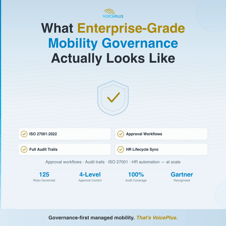
The principles behind the pledge align closely with internationally recognised information security and governance frameworks, including ISO/IEC 27001:2022, particularly in the areas of:
Asset Management (Annex A.5 & A.8) – Maintaining accurate inventories of authorised, compliant devices and their ownership, location, and lifecycle status
Supplier and Third-Party Risk (Annex A.5.19–A.5.23) – Ensuring procurement channels and online marketplaces meet compliance and security expectations
Operational Security (Annex A.8) – Preventing unauthorised or non-compliant devices from connecting to corporate and operational networks
Incident Management (Annex A.5.24–A.5.28) – Detecting, reporting, and responding to device-related security and compliance incidents
By embedding these controls into procurement and mobility programs, organisations can reduce the risk of illegal equipment entering their environments and strengthen their overall compliance posture.
Leading enterprises are increasingly adopting structured Device Lifecycle Management (DLM) and Managed Mobility Services (MMS) models to address these risks. Key elements include:
Compliant Procurement – Sourcing devices only through authorised, ACMA-aligned suppliers and validated online platforms
Secure Onboarding – Enrolling devices into UEM/MDM platforms to enforce configuration, encryption, and access controls from day one
Ongoing Compliance Monitoring – Tracking device status, firmware, and network behaviour to detect anomalies or non-compliant usage
Controlled Offboarding and Disposal – Ensuring data sanitisation, de-registration, and environmentally responsible disposal of retired equipment
This approach not only supports regulatory compliance, but also improves cost control, operational resilience, and security assurance.
To learn more about how VoicePlus supports Australian enterprises with governed mobility, compliance, and secure device lifecycle management, explore:
From a VoicePlus perspective, initiatives like the ACMA Equipment Safety Pledge highlight a broader shift in the Australian market: mobility, connectivity, and endpoint security are now core governance and risk domains, not just IT or procurement functions.
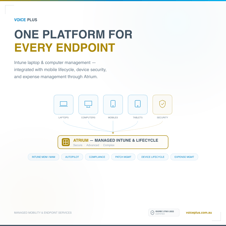
By integrating telecom expense management, device lifecycle management, and unified endpoint management into a single, governed platform, enterprises can:
As the ACMA continues to expand industry participation in the Equipment Safety Pledge, organisations that proactively align their internal policies, supplier agreements, and device governance models will be better positioned to manage regulatory change, protect critical communications, and maintain trust with customers, partners, and regulators.
For enterprises seeking to strengthen compliance, security, and cost control across their mobility and communications estate, a governed device lifecycle is no longer optional — it is a foundational component of modern risk management.
Attribution: Based on an ACMA announcement published on 12 December 2025 — Original source: https://www.acma.gov.au/articles/2025-12/new-equipment-safety-pledge-protect-australians-dodgy-devices
3 Strategies to Reduce Telecom Cost